REX’S FIELD NOTES · DRUMMED DG · SEA–RAIL
The port is not the finish line: plan securing for Russia’s rail leg.
These drummed liquid dangerous goods travelled from Shanghai via Vladivostok, with onward rail transport to St Petersburg. I arranged the booking, origin stuffing and securing, the sea leg and the onward railway movement.
The route for this shipment
01 / Sea origin
Shanghai
Booking, stuffing and securing at a partner warehouse
02 / Sea–rail connection
Vladivostok
Arrival by sea and transfer to the Russian rail network
03 / Rail destination
St Petersburg
Onward rail transport arranged by Rex

Written by Rex Xu·Shanghai, China
Shanghai Dangerous Goods & International Freight Forwarding Expert
Published
My scope covered booking, stuffing and securing in Shanghai, sea transport to Vladivostok and onward rail to St Petersburg. The cargo transferred successfully to rail, and I received no request for re-securing. The practical lesson is to consider the onward rail requirements before the container is packed at origin.
A container ready for the ship is only part of the job.
“Destination: Russia” does not describe the whole journey. A shipment ending at the discharge port and one continuing inland by rail have different handover questions. For this load, Vladivostok was a connection point, so the preparation in Shanghai needed to look beyond the sea leg.
I consider the booking, warehouse operation and onward movement together. What is being shipped, how it is packaged and who receives it next all belong in the same conversation. Work that appears complete at origin can otherwise become a problem to resolve at the next handover.
Do not leave the securing question until Vladivostok.
Confirm the onward rail acceptance requirements early. If the load needs reworking after arrival, the consequences can extend beyond materials and labour to unpacking, storage, waiting and revised transport arrangements. Charges depend on the circumstances; the point is to address the question before it becomes an overseas coordination problem.
A securing plan should consider both the load inside the container and the next transport handover.
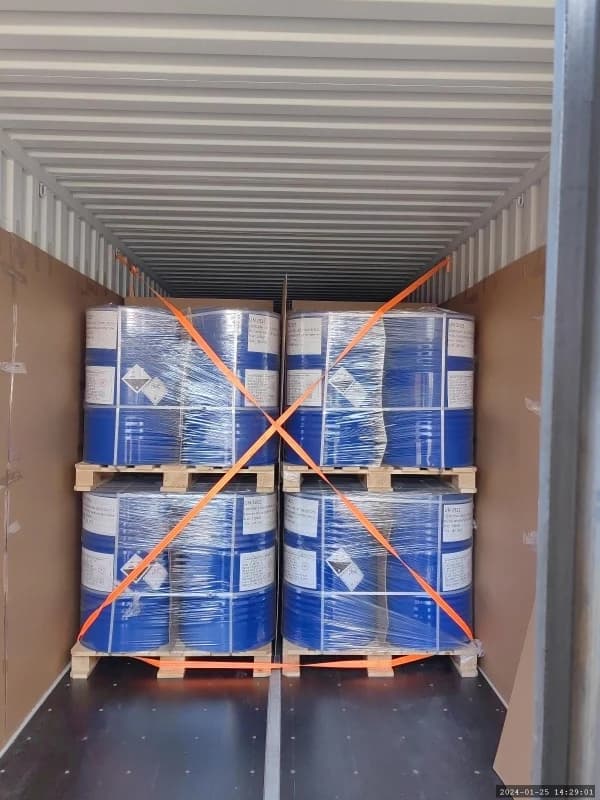
Origin preparation, shown through the work.
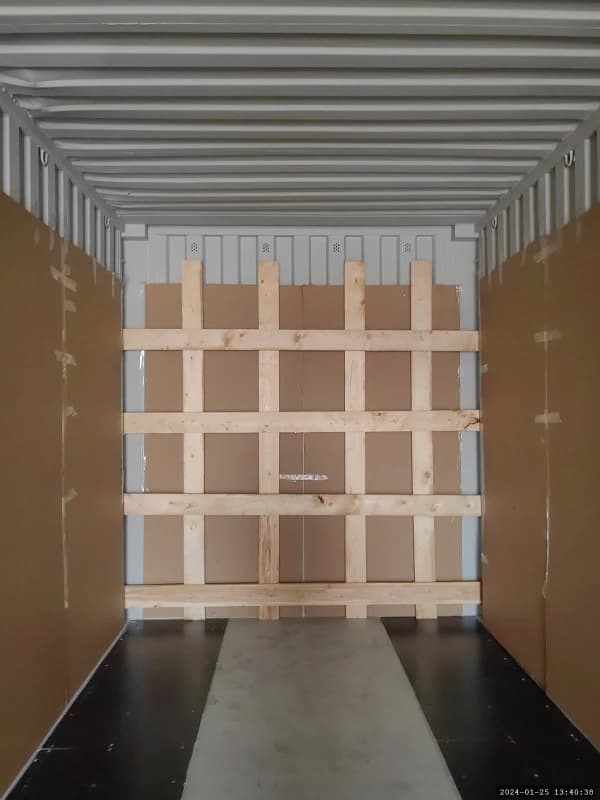
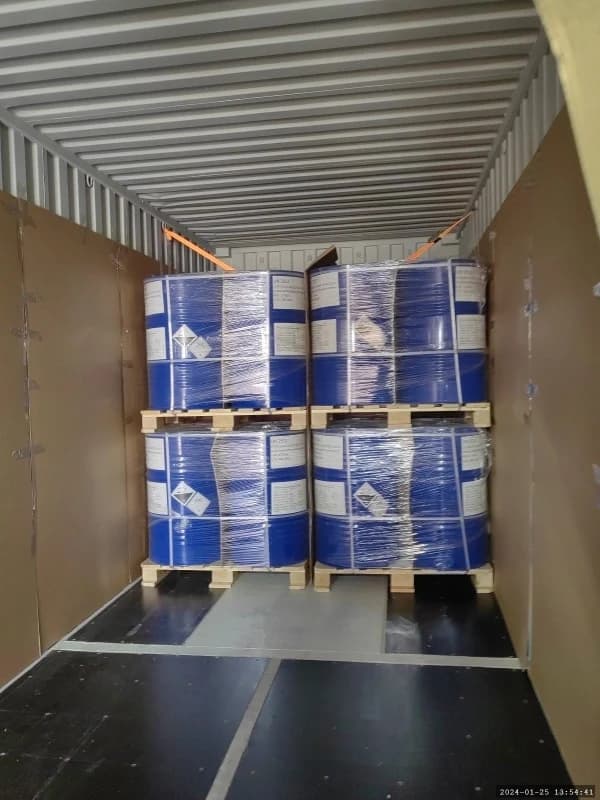
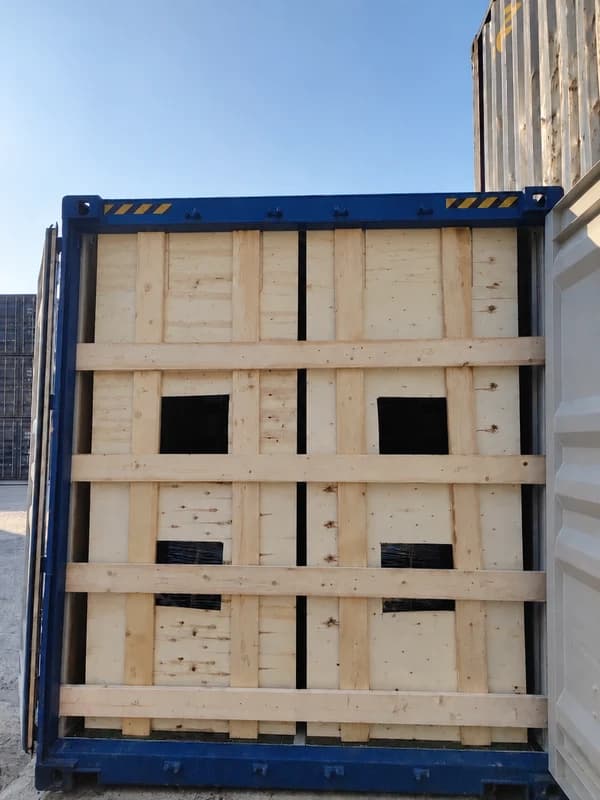
The container-preparation and tiered-loading images are shipment photographs. The door-end bracing image is an illustrative example. Together they explain the elements of a plan, not a universal timber or lashing specification for every load bound for Russia.
01
Prepare the container before loading
The empty-container photograph shows internal lining and front-end timber bracing. Securing is not simply an extra task after the container is full. Contact surfaces and support positions need consideration in the loading plan.
02
Consider the layout, tiers and separation together
The palletised drums are arranged in tiers, with the layout and separating material visible during loading. Suitability for stacking, weight distribution and support must be checked for the actual packages. Another drum shipment does not automatically call for the same arrangement.
03
Make door-end bracing part of the overall arrangement
The illustrative example shows the relationship between door-end timber members; the opening shipment photograph shows crossed lashings. Lining, layout, restraint and support work as parts of a plan. The example supports discussion; dimensions, forces and acceptance requirements still need shipment-specific review.
One scope, covering the booking and the onward connection.
Describe the complete route
Explain the rail destination and the requested responsibility, not just the sea discharge port. In this case, I also arranged the railway movement to St Petersburg.
Bring onward requirements back to origin
I review cargo and packaging information alongside the supplied securing instructions and receiving-party requirements, then coordinate the work with the partner warehouse. Ask these questions before the container is sealed.
Keep a useful record of the work
Photographs document the lining, layout, lashings and timber supports for discussion and checks. Confirm the images, drawings or other records required for the particular shipment. Photographs do not replace formal review.
Successful rail transfer. No re-securing request received.
After the sea leg to Vladivostok, the cargo transferred successfully to rail. I arranged the onward railway movement to St Petersburg and received no request to redo the securing. That is the result of this shipment, not a promise that the same arrangement will suit every package or route.
The repeatable lesson is the preparation sequence: understand the whole route, confirm the applicable requirements, then translate the plan into the loading work.
Questions to ask before a Russia sea–rail shipment
Does sea acceptance also establish rail acceptance?
No. They are separate confirmations. Check the cargo, packaging, securing and required records with the actual receiving party before shipment, rather than assuming that the next leg will accept the sea-leg arrangement.
Can my warehouse copy the arrangement in these photographs?
The shipment photographs record this case, and the door-end example illustrates a layout. Neither is a construction drawing. Package dimensions, gross weights, quantity, stacking conditions, container type and route can change the plan. Share the actual cargo information for a shipment-specific review.
Was your role limited to the Shanghai warehouse?
No. I arranged booking, stuffing and securing, sea transport to Vladivostok and onward rail to St Petersburg. A new instruction needs its own agreed scope. Destination customs clearance or final delivery should not be assumed to be included unless specifically agreed.
Can a forwarder with its own booking request origin support?
Yes. Share the existing booking, cargo and packaging details, and the onward party’s requirements. Stuffing, securing and other Shanghai origin services can be discussed as a defined instruction without requiring the ocean booking to be placed through us.
Tell me what happens after the sea leg.
Send package photographs, dimensions, quantity, gross weight per unit, the SDS and any onward instructions. Include the rail destination, unresolved questions and the parts of the shipment you want me to arrange.
Discuss your sea–rail shipment- 01Cargo and packaging information
- 02Sea ports and rail destination
- 03Onward instructions and any existing booking
- 04Required services and planned timing