REX’S FIELD NOTES · IBC DANGEROUS GOODS · ROTTERDAM
18 IBCs: European-Style Loading & Securing Case StudyInside the container is where the detail matters.
The customer ordered 18 tonnes in 18 IBCs. I arranged the booking, stuffing and securing, DG declaration, export customs and sea freight from Shanghai to Rotterdam. There was no onward land transport in this shipment.
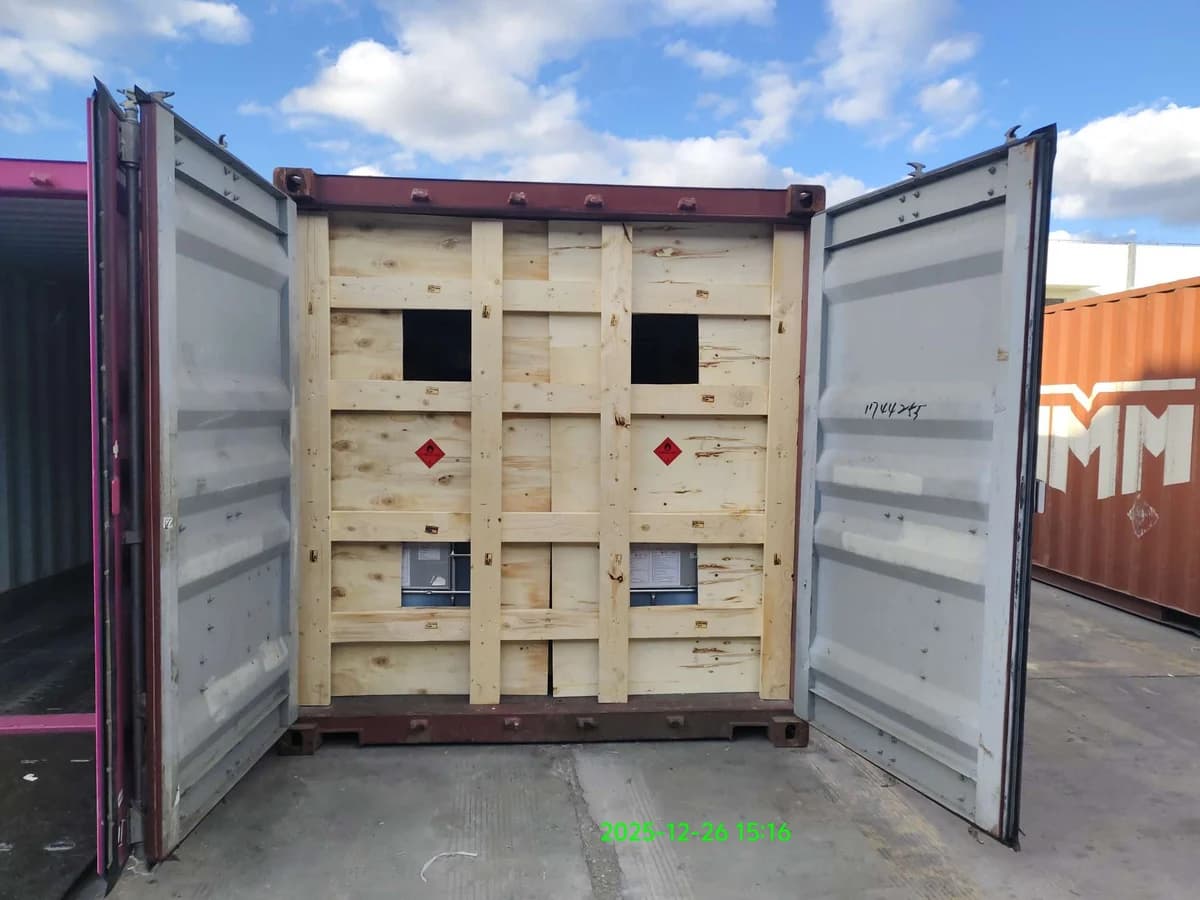
This shipment at a glance
- Route
- Shanghai → RotterdamSea transport; no onward land leg
- Customer order
- 18 tonnes · 18 IBCsOrder quantity, not a loading limit
- Responsibility
- Booking to sea freightIncluding stuffing, securing and export formalities
- Outcome
- Arrived and deliveredNo adverse feedback received

Written by Rex Xu·Shanghai, China
Shanghai Dangerous Goods & International Freight Forwarding Expert
Published
6 min read
For this 18-IBC dangerous goods shipment, my responsibility covered booking, partner-warehouse stuffing and securing, DG declaration, export customs and ocean freight. The cargo arrived in Rotterdam and was delivered, with no adverse feedback received. The photographs show how the load layout, void treatment and timber bracing were brought together for this particular order.
Eighteen was the order—not a capacity claim.
After reading the 20-IBC loading case, a customer might reasonably ask why this shipment contained eighteen. The answer is the order itself: 18 tonnes in 18 IBCs. It was not a decision to leave two units behind, nor evidence that this IBC model could only be shipped in an eighteen-unit load.
The two cases answer different questions. One looks at package dimensions and door clearance. This one shows how an agreed cargo quantity translates into a layout, with attention to the spaces between packages and the relationship between restraints and timber supports.
For an overseas forwarder or exporter, the value is seeing the actual origin work. A partner warehouse carries out the agreed loading and securing; I coordinate the initial plan, key questions and the requested shipping scope. The photographs make that work visible before the doors are closed.
The order sets the quantity. The cargo and the journey shape the loading plan.
A closer look at the work inside.
These photographs record three stages of the same shipment. Read the rows of IBCs, dunnage bag, restraint band and timber supports as parts of one arrangement—not as stand-alone solutions for every load.
01
Plan the positions before completing the restraints
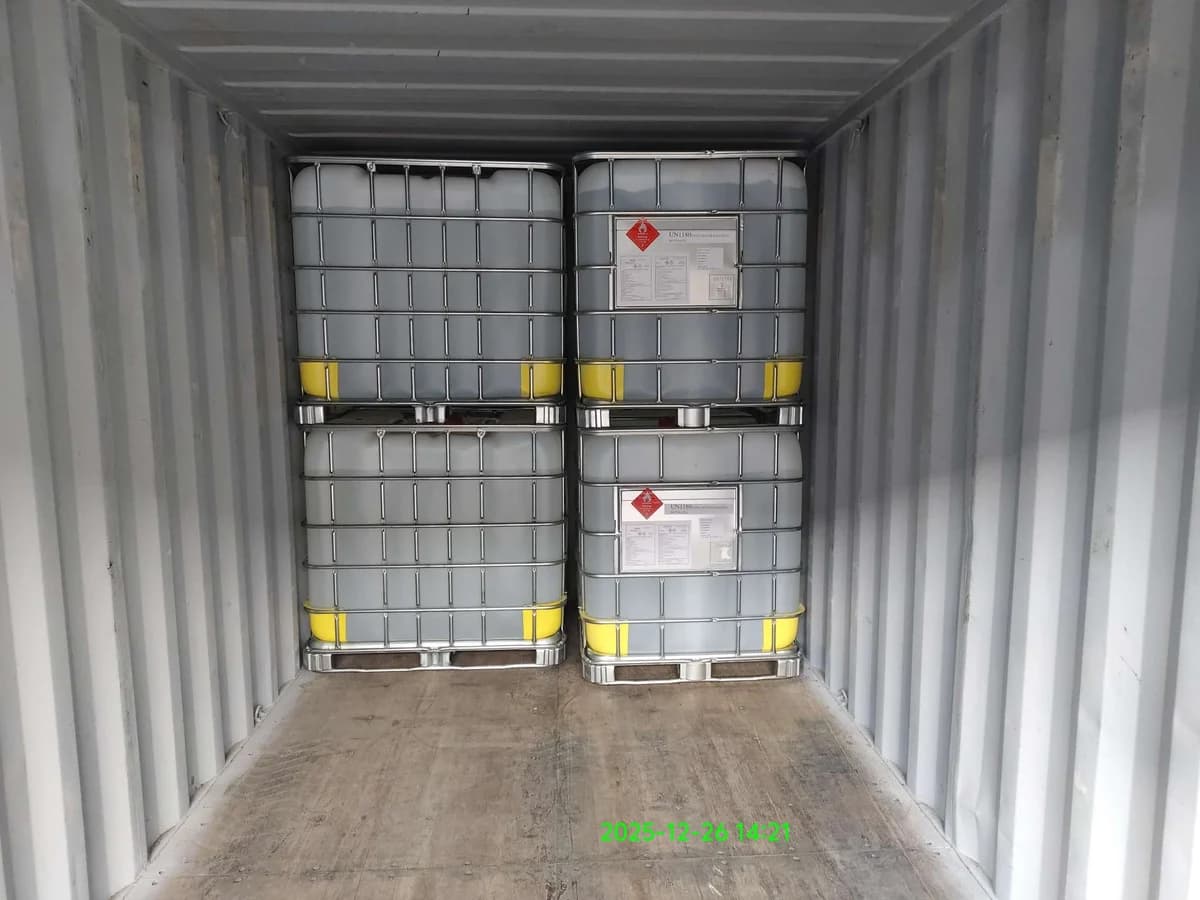
The loading photograph shows IBCs arranged in rows and tiers. It connects the actual package shape with the container space and the locations that will need attention as loading progresses.
“IBC” is not a complete packing specification. Dimensions, base design, gross weight per unit and permitted stacking conditions still need checking. This photograph documents the positions used here; it does not establish the stacking capability of another package.
02
Treat the spaces as part of the plan
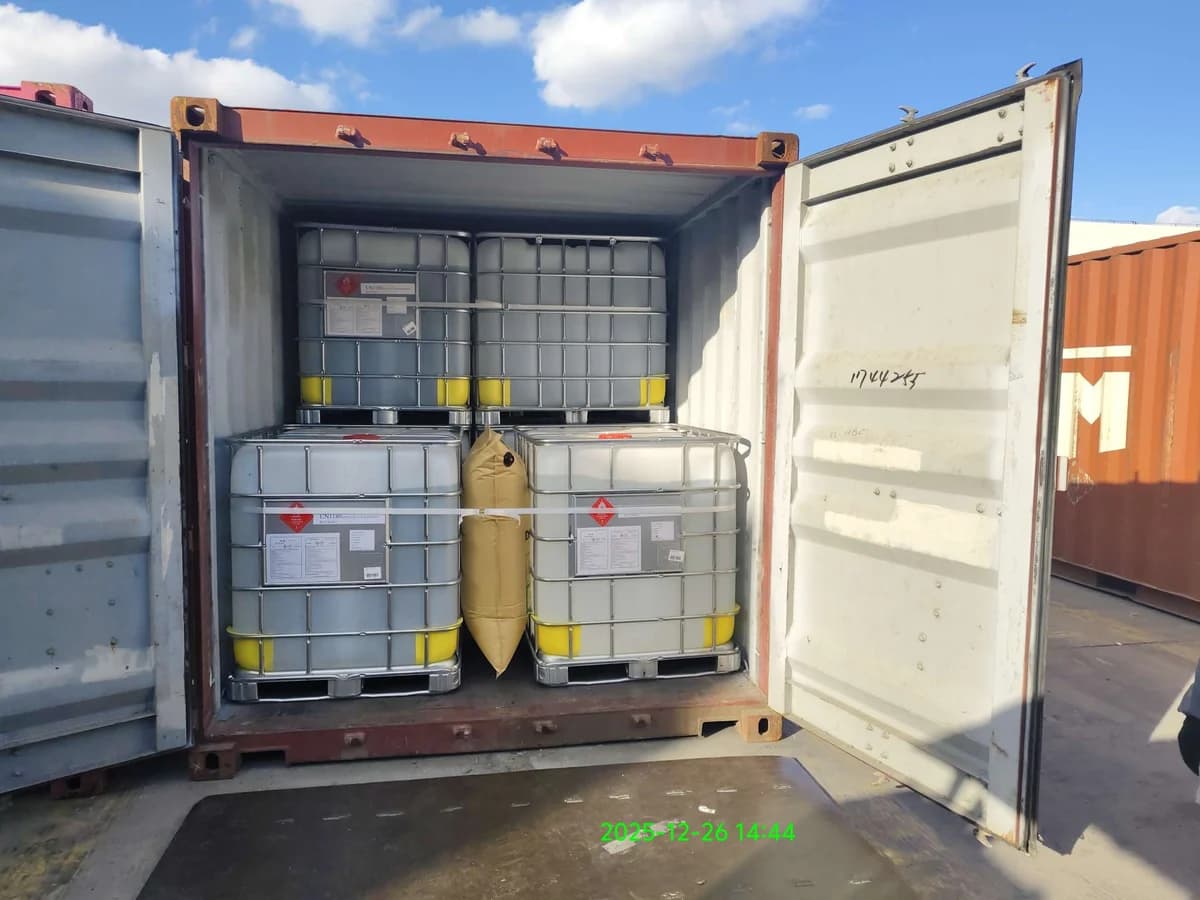
A dunnage bag is visible between the two door-end IBCs, with a restraint band across the front. This is a useful view of the work before the final door-end timber arrangement is in place.
Whether a bag is suitable, where it belongs and how the load is restrained depend on the actual voids, package contact surfaces and transport requirements. The presence of a bag or band alone is not evidence of a complete securing design.
03
Consider the upper tier and the door end together
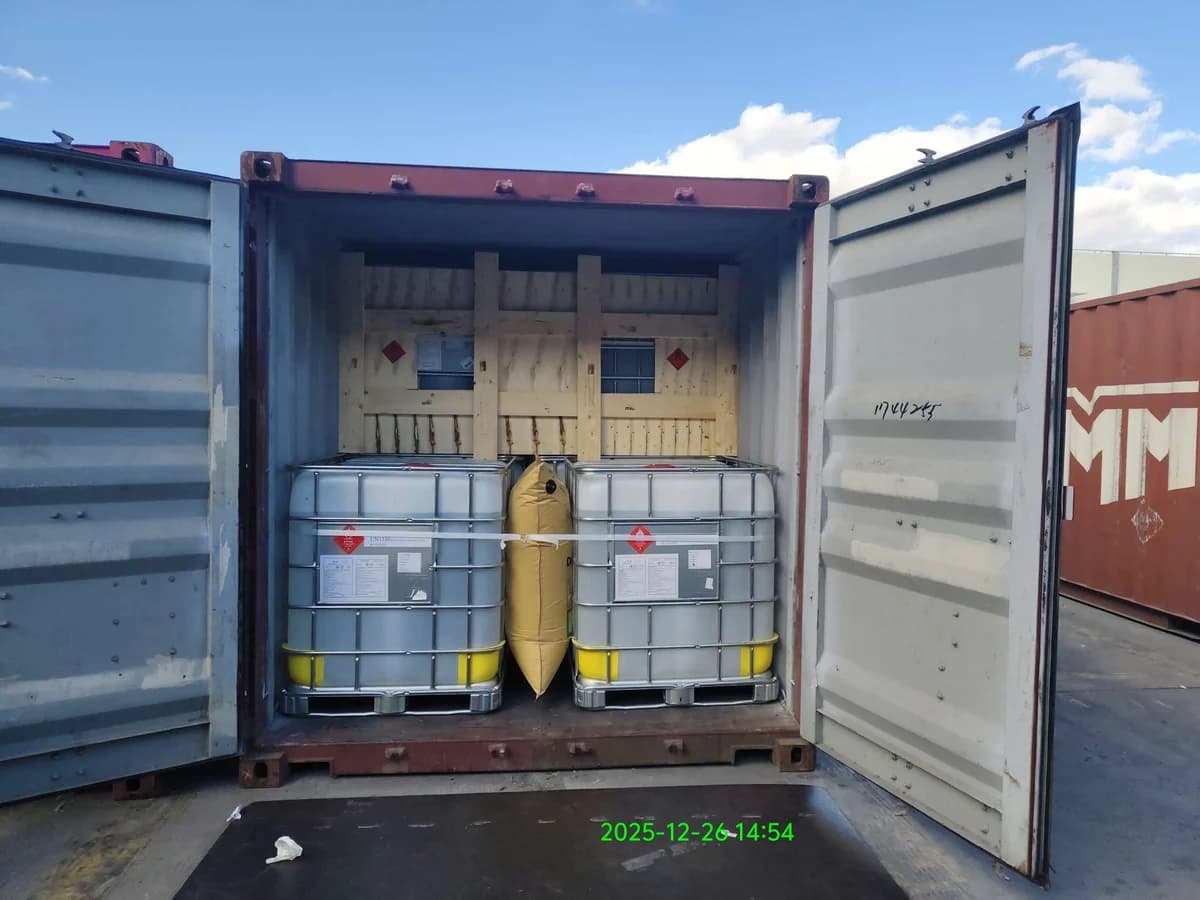
Here the upper timber bracing can be seen above the lower IBCs and dunnage bag. The opening photograph shows the subsequent door-end timber arrangement. The sequence gives more context than a single closed-container image.
Timber bracing is not a shape to copy without review. Member sizes, connections and forces belong to the shipment-specific design. Photographs help document and discuss the operation; they do not replace design checks or receiving-party acceptance.
Origin handling connected to the shipping instruction.
This instruction covered booking, stuffing and securing, DG declaration, export customs and sea freight to Rotterdam. There was no onward land leg. My role was to coordinate the work across that agreed scope, not just arrange space on a vessel.
Planning and key questions
I handle the initial plan and key coordination: the customer order, package details and requested services. The 18-tonne figure describes the order. Gross-weight and other booking or declaration figures must still match the actual shipment documents.
Partner-warehouse operation
The partner warehouse carries out the agreed stuffing and securing. Photographs at different stages give the customer a view of the layout and work before the container doors are closed.
Operations and milestones
Operations colleagues handle routine bookings, documents and milestone feedback, coordinating the DG declaration, export customs and sea movement. Changes to cargo, documents or plans need communicating and reviewing together.
Arrived and delivered. No adverse feedback received.
The 18 IBCs reached Rotterdam and were delivered, with no adverse feedback received. This outcome relates to the Shanghai–Rotterdam instruction. It does not add destination customs clearance or inland delivery to my scope, and it is not a promise about future shipments.
The practical value is the connected service: attention to the load inside the container, alongside coordination of the booking, declarations, export customs and ocean freight.
Before you request IBC loading and securing
Why were there eighteen IBCs rather than twenty?
The customer order was 18 tonnes in 18 IBCs. Eighteen was not a confirmed maximum loading capacity. A different load requires its own check of package dimensions, gross weights, stacking conditions, the actual container and securing arrangements.
Is this a mandatory European securing arrangement?
No such claim is made. The photographs show this Rotterdam shipment, not a single compulsory method for every European route. A new instruction must be reviewed against the cargo, packaging, route and actual carrier and receiving-party requirements.
Can I keep my ocean booking and request origin handling only?
Yes, a defined origin-service instruction can be discussed. Share the booking, cargo and package details, and specify whether you need stuffing and securing, DG declaration or export customs support. This case included our ocean arrangement, but that is not a condition for every instruction.
What should I send for an initial discussion?
Send package photographs, external IBC dimensions, quantity, gross weight per unit, the SDS, ports, any existing booking and special instructions. Mark unknown stacking or other data for review. Documents produced after completion of the DG declaration are not a prerequisite for the first enquiry.
Start with the cargo. Define the support you need.
Whether you need the sea-freight arrangement or Shanghai origin handling only, share the cargo information and the intended scope. We can then discuss the work required for your shipment.
Discuss your IBC shipment- 01Package photographs, dimensions and quantity
- 02Gross weight per unit and known stacking conditions
- 03SDS and available cargo information
- 04Route, timing and requested services