REX’S FIELD NOTES · AN IBC LOADING CASE
20 IBCs in a 20GP. Start with the final row.
When a customer asks whether 20 IBCs will fit, I ask for their dimensions first. In this loading experience, the 1200 × 1000mm footprints needed the right arrangement. The row beside the doors needed particular attention to height.
See the final-row arrangement ↓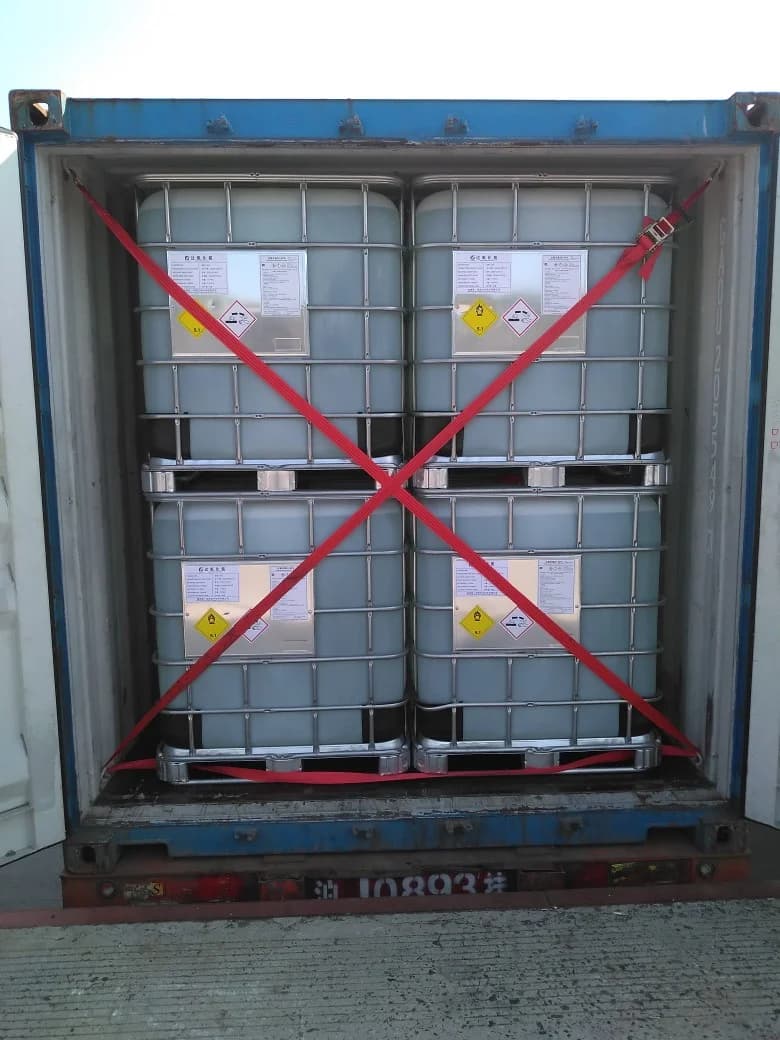
- IBCs in this load
- 20
- Container type
- 20GP
- IBCs in the door-end row
- 4
- Shorter IBC nominal height
- 1145 mm

Written by Rex Xu·Shanghai, China
Shanghai Dangerous Goods & International Freight Forwarding Expert
Published
This case documents a completed 20-IBC load in a 20GP container. My arrangement uses alternating orientations of 1200 × 1000mm IBC footprints. When mixing the heights discussed here, the four 1145mm IBCs go in the final row beside the doors. A new shipment still requires checks of the actual packages, stacked height, door clearance, weight and transport stacking conditions.
Fitting inside is only part of the question.
A volume calculation can miss the constraint that matters during loading. An IBC has a frame and a base; its external dimensions are not the same thing as its liquid capacity. The load also has to pass the doors, with workable handling and securing arrangements.
These photographs follow the loading from the front of the container to the restrained door-end row. The useful lesson is not an unconditional formula for 20 IBCs. It is knowing which dimensions to ask for and which positions need separate attention before cargo arrives.
Alternate the orientation from one row to the next.
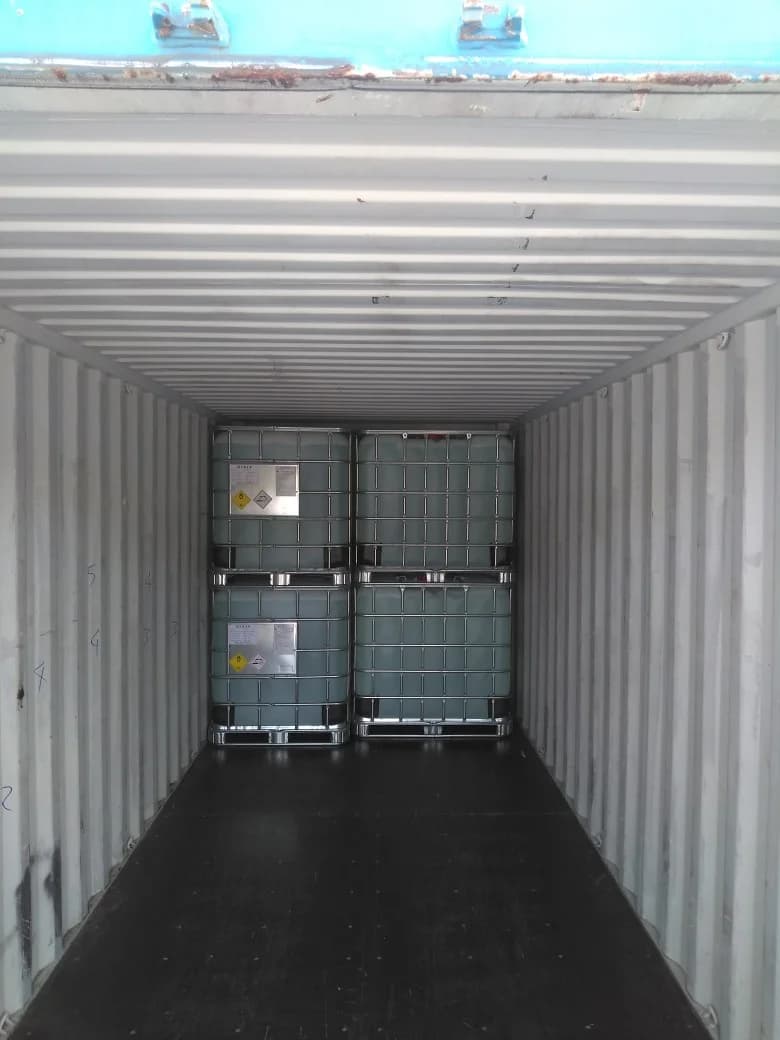
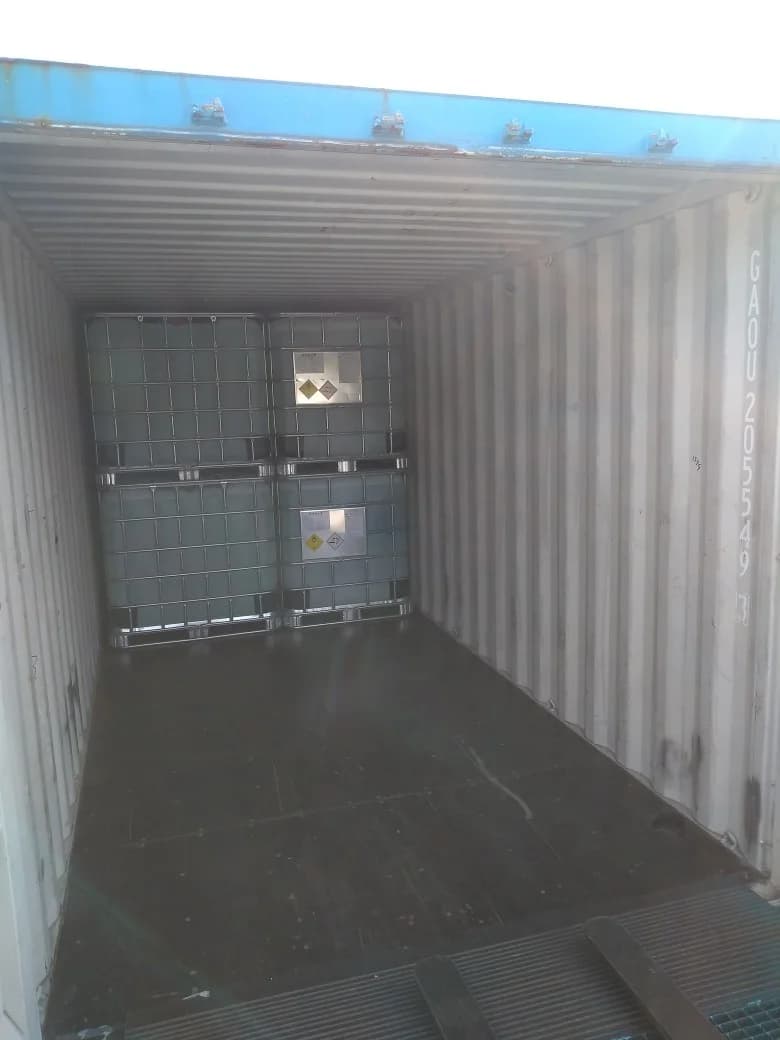
Looking into the container from the doors, the first row has the left IBC lengthwise and the right IBC crosswise. The next row reverses those orientations. With the 1200 × 1000mm footprints discussed here, both the orientation within each row and its reversal in the next row form part of the staggered layout.
These photographs show two adjacent loading stages so the change is visible. Lengthwise and crosswise describe the long edge of the footprint relative to the container; the IBCs remain upright. Confirm actual positions, handling order and clearances for the packages and container being used.
01
First row
Left: lengthwise · Right: crosswise
02
Next row: reverse the orientation
Left: crosswise · Right: lengthwise
Reserve the final row for four shorter IBCs.
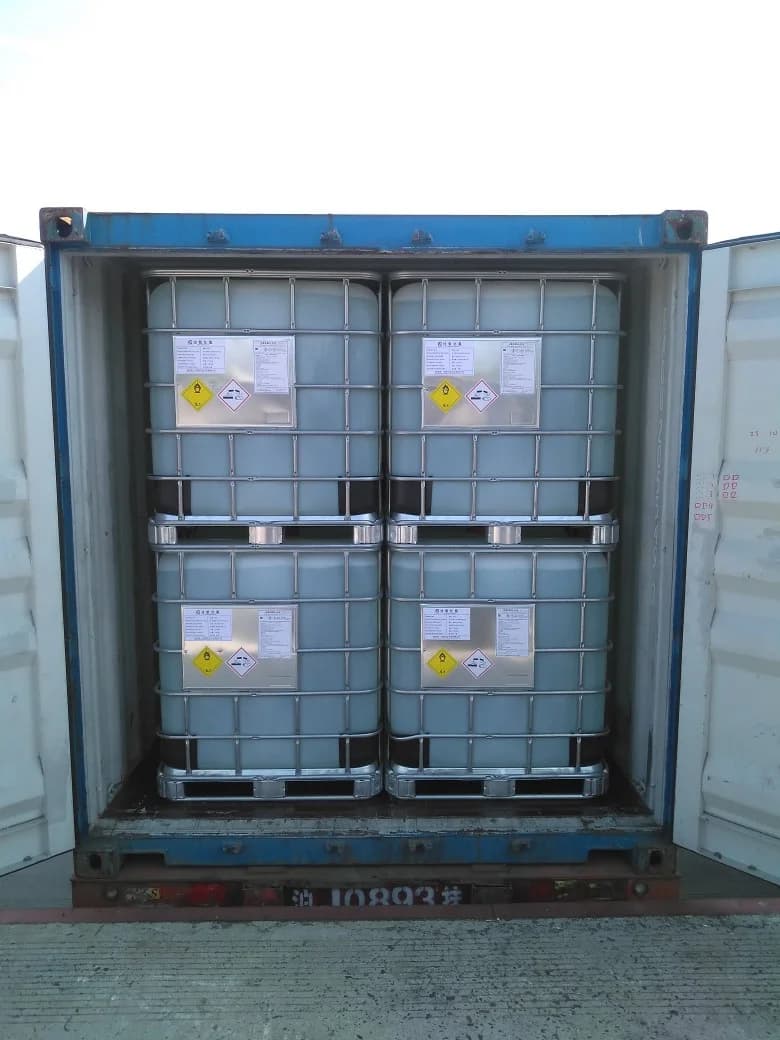
The key position is the final row beside the doors: four 1145mm IBCs, arranged two across and two high. They are not distributed at random further inside. Their position addresses the height constraint at the door end.
In the arrangement I describe, all 20 IBCs can be the 1145mm type. Where the other positions use the 1160mm type, the four door-end positions need the shorter 1145mm IBCs. All these dimensions are in millimetres.
With the taller 1160mm IBCs throughout, the upper two at the door end meet the header constraint in the container and operating conditions behind this experience, leading to an 18-IBC arrangement instead. A different container, package or operating setup needs a fresh review; this is not a universal 18-unit limit for all 1160mm IBCs.
Door-end view: the final row
↑ The other 16 IBCs are further inside
Upper tier
Lower tier
Beside the doors · Four shorter IBCs
A nominal 30mm difference is worth checking early.
Adding two nominal heights gives 2290mm for the 1145mm type and 2320mm for the 1160mm type: a 30mm difference. That calculation does not replace measurement of the assembled stack. Base interfaces, handling clearance and the actual door opening still need checking. A shorter package is not an automatic approval.
Carrier equipment information lists internal dimensions separately from the door opening and notes manufacturer variation. This case does not treat a sample container’s door height as a fixed dimension for every 20GP. Hapag-Lloyd · 20′ Standard
What else belongs in the loading review?
01
Dimensions of the actual packages
Include the frame and base in the length, width and height. List each type when mixing IBCs. Confirm the door-end units before warehouse delivery, rather than discovering a different height on arrival.
02
Conditions for stacked transport
Check the applicable loaded transport stacking conditions and assembled height. Static storage stacking experience alone does not establish suitability for the journey.
03
Weight as well as quantity
Twenty is a count, not permission for any product density or gross weight per unit. Check the shipment total, actual container capacity and weight distribution.
04
Handling and securing arrangements
The plan must allow practical handling and appropriate support or restraint for the cargo and route. The photographed arrangement is not a universal construction instruction.
This load held 20. The next one starts with the right questions.
This job completed the loading and lashing of 20 IBCs. For the next customer, the value is in asking the questions earlier: confirm package types and heights, plan the final row, and review the weight and transport requirements before warehouse delivery. A detail checked in advance gives both sides a clearer basis for the loading plan.
Questions about planning an IBC load
Can the four shorter IBCs go anywhere inside?
Not in the arrangement described here. They belong in the final row beside the doors, two across and two high, because that is where the door-height constraint matters.
Does a 1145mm height guarantee a 20-IBC load?
No. Check the footprint, assembled stack height, actual door opening, handling clearance, weight and conditions for loaded transport stacking. Share the specifications and photographs before arranging the shipment.
Can you support a forwarder with its own carrier booking?
Yes, start by explaining the booking and the work required in Shanghai. Stuffing, securing, DG declaration and customs coordination are discussed within the specific instruction; booking ocean freight through us is not a prerequisite.
Send the dimensions, not just “20 IBCs”.
Start with photographs, external dimensions for each IBC type, quantity, gross weight per unit and the route. Mark unknown measurements as unconfirmed rather than guessing to complete an enquiry.