Shanghai Port · Service
Shanghai Dangerous Goods FCL Shipping
Shanghai DG FCL: connect the carrier booking, cargo filings, container loading and terminal handover in one workable plan.
The short version
Decide what can travel together, how it will be packed and secured, and which records must be ready for each deadline—not just which vessel has space.
- 20GP / 40GP / 40HQ
- Container Loading Plan
- Lashing & Securing

What does this service actually cover?
A full container makes the cargo composition visible for planning; it does not remove dangerous goods segregation or carrier acceptance requirements. Review the actual substances, packages, quantities and route before dispatch.
Loading dimensions, gross weight, weight distribution, securing and any subsequent transport leg all affect the plan. More internal space does not automatically mean more permitted payload.
I handle the initial plan and key questions. THANKSTART operations colleagues coordinate daily booking, documents and milestone updates within the agreed commission.
Cargo planning for a full container
- 20GP / 40GP / 40HQ
- Standard box types; the choice affects stowage, securing and cost.
- Container Loading Plan
- Shows segregation, stowage and securing before the container is stuffed.
- Lashing & Securing
- Securing arrangements that hold the cargo for the duration of the voyage.
Choose the scope your shipment needs
- Booking
- DG document coordination, where applicable
- DG filings, where applicable and commissioned
- Export customs within the agreed scope
- Trucking, if commissioned
- Partner warehousing, if commissioned
- Container loading and securing
- Shipping line coordination
How does a shipment actually move?
These are coordination stages, not a rule that every activity waits for the previous one. Documents, loading and customs may progress in parallel.
Identify the cargo and proposed container
Review each product, supporting evidence, package dimensions, quantities and weights. Check container and route feasibility before committing the loading plan.
Agree compatibility and securing
Assess the actual cargo combination and applicable segregation requirements, then agree the warehouse loading and securing arrangement. Changes require review.
Arrange space and filing inputs
Submit the carrier application. Once vessel, voyage and B/L details and the required evidence are ready, coordinate cargo filing; it need not always wait until stuffing is finished.
Complete stuffing and actual records
Coordinate container inspection, stuffing, securing and the before/during/after records. Prepare the electronic container packing certificate from actual inspection—not an unperformed plan.
Meet agent and terminal milestones
Bring the cargo-filing response, container details, photos and EDI records together for the ship-agent stage. Coordinate customs, VGM and approved terminal receiving/direct-loading windows separately; track actual departure.
What information and documents should we prepare?
Separate first-enquiry information from formal booking documents and later records produced during operations.
- Available SDS and product informationRequired
Start with documents matching the actual cargo and flag unconfirmed classification details.
- Package sizes, quantities, weights and loading requirementsRequired
Inputs for the loading plan. You do not need to produce a finished warehouse plan before asking us.
- Applicable packaging evidenceConditional
Confirm the correct evidence for the product and packaging before the relevant booking or filing stage.
- UN38.3 test report / summaryConditional
These are different documents. Our formal lithium-battery FCL checklist requests the report.
- Stuffing photos and electronic container packing certificateRequired
Later operational records for the relevant Shanghai filing stage, produced from actual loading/inspection. Not documents the customer must already have at first enquiry.
Not sure what you need?
From enquiry to booking
What is needed for a formal DG FCL booking?
Available information is enough to start an enquiry. For a formal booking, work through our checklist and the actual carrier template. An enquiry, a carrier application and later maritime filings are different stages.
Booking instructions: one line per product
Provide shipper and consignee details, route and container type; itemise descriptions, HS codes, package counts, gross and net weights and volume. Check UN number, proper shipping name, primary and subsidiary hazards, applicable packing group and marine pollutant status. Our checklist asks for flash point for Class 3 cargo. Flag unknown or inapplicable fields; do not guess.
A complete English SDS matching the product
Our formal booking checklist calls for all 16 sections, with transport information checked against the shipment—not just a screenshot of section 14. Notify operations when products, packaging, quantities or routing change so affected information can be reviewed again.
Packaging evidence for this shipment
Check applicable packaging use-appraisal documents and other evidence; cylinders and IBCs need their specific documents reviewed. If a new document is pending, our preliminary booking practice may use an older scan for the same product and packaging, subject to carrier agreement and completion of shipment-specific evidence. It does not replace final documents.
Carrier DG application: assistance is available
We provide the relevant DG Form / DGF / MDGF template. Complete it yourself or ask us to help using your accurate shipment information, with shipper and consignee 24-hour emergency contacts and names in English. Confirmation and signatures follow the actual template; assistance does not transfer signing responsibility.
Additional cargo-specific evidence
Our lithium-battery FCL checklist calls for the UN38.3 test report; a summary is not the full report. Where packaging papers are unavailable, review the proposed document route and additional transport appraisal—it is not an automatic exemption. Limited quantity shipments need the applicable supporting and filing information checked separately.
Our preparation guidance is normally 10–15 days before planned sailing, with earlier discussion around 20 days for June–August and November–December. This is company planning guidance, not a statutory deadline or space guarantee. Complex cargo, holidays and corrections require additional allowance.
For forwarding partners
Already booked? Add Shanghai origin services.
Overseas agents and China-based forwarders can retain their own ocean booking and discuss origin services with us. Acceptance, interfaces and charges are agreed for the actual shipment; moving the ocean booking to us is not a prerequisite.
Warehouse stuffing + DG filings + customs
Deliver to the agreed partner warehouse; coordinate empty-container pickup, stuffing and securing, packing records and declarations. Confirm the loaded-container handover point separately.
Trucking + DG filings + customs
Factory packing can proceed under the agreed plan when an on-site inspector, Shanghai MSA system registration, photo and EDI reporting arrangements are in place. Where conditions are missing, our route returns the goods to a Shanghai partner warehouse for actual unstuffing, restuffing and inspection. Factory stuffing does not automatically mean restuffing is required.
View the origin-service handover checklist →
I coordinate the initial plan and key issues; THANKSTART operations handle the commissioned daily work, documents and milestone updates. Destination services are not automatically included in an origin-service commission.
Factory packing or warehouse restuffing? Review trucking arrangements →
Tell us about your booking and required scope →Are stuffing and direct-to-vessel charges duplicates?
In our quotations they cover different handover stages. First establish where the container is packed, where it is delivered and who arranges the later shipside transfer.
- Warehouse stuffing package
- Charged by the operating warehouse for empty-container pickup, stuffing and delivery to the agreed terminal or DG warehouse handover point. It is more than stuffing labour, but does not automatically include every later direct-loading operation.
- Direct-to-vessel / truck-to-vessel transfer
- This covers the later movement of the packed container to shipside and the handover for vessel loading. In the Waigaoqiao arrangement I describe, it is collected and paid on the customer’s behalf, separate from stuffing. These are alternative names for that service, not grounds to add the same charge twice.
What is different about this port?
Agree the arrangement before dispatch
An early loading plan gives the factory, warehouse and haulier a common basis. If cargo, packing or routing changes, re-check the affected arrangement rather than assuming the original approval still applies.
Weight includes the onward move
Container limits, road movement, terminal handling and any onward leg need checking together. A volume calculation alone cannot establish a workable shipment.
Questions I get asked most often
- When is FCL better than LCL for dangerous goods?
- Compare quantity, the actual cargo combination, available consolidation service, timing and total charges. Small or unusual cargo is not automatically suitable for LCL; acceptance and compatibility still require review.
- Must I provide a finished loading plan at first enquiry?
- No. Send package dimensions, quantities, weights, cargo evidence and any destination or onward-transport requirements. We can coordinate the plan within the agreed scope.
- Do loading photos have to be ready before booking?
- No. They are produced during actual operations. The later Shanghai ship-agent filing stage needs the relevant container details, cargo-filing response, photos and electronic packing records; photos are not merely optional marketing material.
- Can you handle origin operations if I book with the carrier myself?
- Yes. We can agree warehouse stuffing, DG filings and customs, or trucking, DG filings and customs. Send the existing booking details, filing cut-off and the scope you want us to handle.
- Can dangerous and non-dangerous cargo share an FCL container?
- It may be possible, but not from the labels DG and non-DG alone. Review the actual goods, applicable segregation, packing, stowage and carrier conditions. Do not load an unreviewed combination.
Before you book
Classification, packing and acceptance remain subject to the current edition of applicable regulations, carrier review and port requirements. Final dangerous goods acceptance is made by the carrier after document review — submitting a request through this website is a preliminary assessment, not a booking confirmation.
Related cargo
Lithium Battery Shipping from Shanghai
Battery identity, condition, shipping configuration and matching test evidence.
Energy Storage Shipping from Shanghai
Transport units, complete shipping weight and route acceptance—not capacity-based assumptions.
Electric Vehicle Shipping from Shanghai
Propulsion, battery arrangement, condition and loading—not a single UN entry for every vehicle.
8 UN · MIXED DG FCL · MANZANILLO
Eight UN numbers. One container.
This shipment combined dangerous goods with eight different UN numbers in one container, from Shanghai port to Manzanillo, Mexico. The cargo has arrived at the destination port.
Read the mixed-load DG case →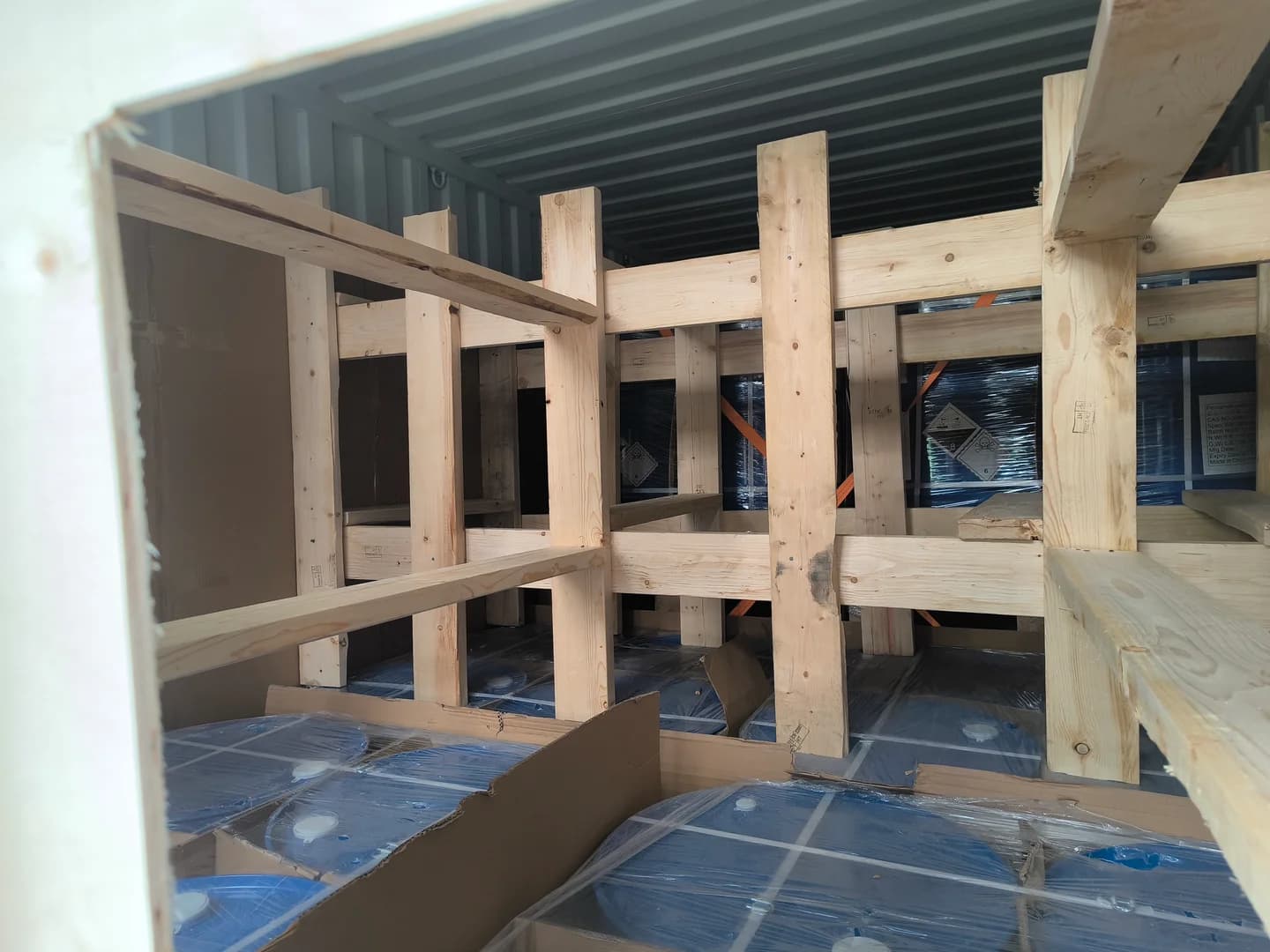
DG loading & securing
Plan the securing around the cargo and its route.
IBCs, drums and crates bring different loading questions. An onward rail movement adds another set of requirements to discuss. I review the cargo and requested scope with you, then coordinate loading and securing arrangements with partner warehouses.
Explore loading and securing support →REAL EXPERIENCE · YOUR NEXT STEP
Different dangerous goods. Start with a mixed-load review.
Case: 8 UN numbers in one container, arrived at Manzanillo →Start with these details
- Cargo list and known UN numbers; flag anything unconfirmed
- Packaging, package count and weight for each product
- Destination, cargo-ready date and requested scope
Complete the review step by step
Individual cargo documentation is reviewed for compatibility, segregation and loading, subject to carrier review. List each product and known UN number in your email, or attach an itemised list; do not combine them under one general description.
Details still incomplete? Start by email; quotation and acceptance require further review.